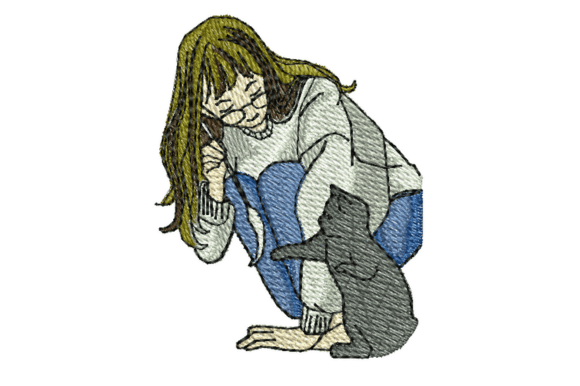
Relax: A Designer’s Review for Small Business Branding
As an experienced embroidery designer, I spend my days evaluating digital files not just for their aesthetic appeal, but for their commercial viability. When a new design enters the market, especially one intended for small business merch, it needs to do more than look pretty on a screen; it must hold up under the needle, withstand the wear of daily use, and enhance brand identity without overwhelming the garment. Today, I am reviewing a design titled "Relax." At first glance, the description suggests a focus on daily life patterns with a playful, customizable approach. But does it translate effectively into a high-quality embroidered patch or a professional brand identity asset? Let’s dive into the technical and creative details.
First Impressions: Personality and Professionalism
The title "Relax" immediately sets a tone. It is inviting, calm, and suggests a lifestyle-oriented brand. The accompanying description mentions that these are "Embroidered patterns designed in your own style" and part of "daily life." This phrasing hints at a design that is likely organic, perhaps featuring elements like coffee cups, books, plants, or abstract shapes that evoke a sense of ease. For a boutique, a café, or a handmade shop, this vibe is gold. It aligns perfectly with the modern consumer’s desire for authenticity and comfort.
However, from a production standpoint, titles can be misleading. Without seeing the actual visual, we must assume the design relies on clean lines and manageable detail levels. If the design is too intricate, it may lose its charm when scaled down for small applications. The promise of "various patterns" suggests versatility, which is crucial for creators looking to build a cohesive collection of design assets. The aesthetic feels friendly and approachable, making it ideal for businesses that want to project warmth rather than corporate rigidity.
Real-World Applications for Merchandise and Uniforms
So, where does "Relax" shine in a real business scenario? Let’s imagine you run a local bakery or a creative studio. You need branded items that customers will actually want to keep and use. Here is how this machine embroidery design could perform across various categories:
- Embroidered Patches: One of the most popular uses for designs like "Relax" is creating custom patches. These can be sewn onto denim jackets, backpacks, or hats. Because the theme is casual, it fits seamlessly into streetwear trends. Ensure the border is clean so it adheres well to fabric.
- Staff Uniforms and Aprons: For a café or florist, a subtle "Relax" logo on the chest of an apron adds a touch of personality without being distracting. It signals to customers that the staff is relaxed and happy, enhancing the service experience. Check the stitch density to ensure the embroidery doesn’t stiffen the fabric too much, which is critical for comfort during long shifts.
- Tote Bag Design: Canvas tote bags are a staple for Etsy sellers and craft fairs. Embroidering "Relax" on a tote bag elevates it from a cheap giveaway to a premium handmade product. The durability of embroidery ensures the logo survives countless washes, keeping your brand visible over time.
- Cap Embroidery: Curved surfaces like caps require careful digitizing. If "Relax" features text, ensure the kerning is wide enough to remain legible on the curve. A minimalist version of the design works best here, avoiding clutter that might get lost in the curvature.
- Product Packaging Accents: Don’t overlook small details. Adding a tiny embroidered tag or patch to gift boxes or packaging creates an unboxing experience that feels luxurious and thoughtful. This attention to detail boosts customer trust and perceived value.
Where Caution Is Required
While "Relax" has strong potential, there are specific scenarios where this design might struggle. As a designer, I always advise clients to test before they commit to bulk production.
- Small Patch Sizes: If you plan to make patches smaller than two inches, intricate details will turn into a muddy blob. Simplify the design if space is limited. Fine lines and tiny lettering often fail to reproduce clearly at small scales.
- High Stitch Density: Designs labeled as "patterns" can sometimes be dense. High stitch counts can cause puckering, especially on lightweight fabrics like thin cotton tees or delicate linens. Always inspect the file for excessive stitching in solid areas.
- Fabric Texture and Color: Embroidery interacts heavily with the base material. On dark uniforms, you will need a substantial underlay or backing to prevent show-through. On textured fabrics like heavy wool or rough burlap, the definition of the design may soften. Test on your actual production fabric whenever possible.
- Curved Surfaces: As mentioned, caps and sleeves present challenges. If the design includes straight lines, they may distort when stitched onto a curved surface. Digitizers often adjust angles to compensate, but it’s worth verifying with a sample.
Impact on Brand Identity and Customer Trust
In the world of custom apparel and commercial embroidery, consistency is key. Using a design like "Relax" helps establish a visual language that customers recognize. When a buyer sees that same calming, daily-life motif on your tote bag, your staff’s apron, and your packaging, it reinforces your brand story. It tells them that you care about the little things.
This consistency builds professionalism. It shows that your business is established and attentive to quality. Furthermore, because the design evokes a positive emotion ("Relax"), it creates a subconscious association between your brand and feelings of ease and happiness. This emotional connection is powerful for buyer engagement and repeat business. Customers don’t just buy a product; they buy into the feeling your brand provides.
Practical Designer Notes for Production
Before you upload this digital embroidery file to your machine, follow these essential steps to ensure a successful outcome:
- Test in Black and White: Remove color distractions by viewing the design in grayscale. This helps you assess the balance of negative space and solid shapes. If the design looks cluttered in black and white, it will likely look cluttered in color.
- Check Thread Color Contrast: Ensure there is sufficient contrast between the thread colors and your chosen fabric. Low-contrast combinations can result in a washed-out look that fails to grab attention.
- Inspect Spacing and Hoop Size: Verify that the design fits within your desired hoop size. If you are embroidering on a cap, use a specialized hoop attachment and check that the design isn’t too tall or wide for the available space.
- Use Proper Stabilizer: The choice of stabilizer (cut-away vs. tear-away) depends on the fabric and the final use. For embroidered patches that will be moved frequently, a sturdy cut-away stabilizer is usually best to prevent distortion over time.
- Create a Printable Mockup: Before committing to physical samples, create a printable mockup to show clients or stakeholders. This allows for feedback on placement and scale without wasting materials.
- Confirm Commercial Licensing: Finally, and perhaps most importantly, verify the licensing terms. Even if the description says "designed in your own style," you must ensure you have the right to sell products featuring this design. Look for clear commercial use rights in the embroidery file documentation.
In conclusion, "Relax" appears to be a versatile and emotionally resonant design suitable for a wide range of small business merch applications. Its focus on daily life and personal style makes it an excellent choice for brands aiming to connect with customers on a human level. By paying attention to technical details like stitch density, fabric compatibility, and proper stabilization, you can transform this digital asset into a tangible representation of your brand’s quality and care. Whether used on a simple tote bag or a complex uniform ensemble, "Relax" has the potential to elevate your finished product and leave a lasting impression.